
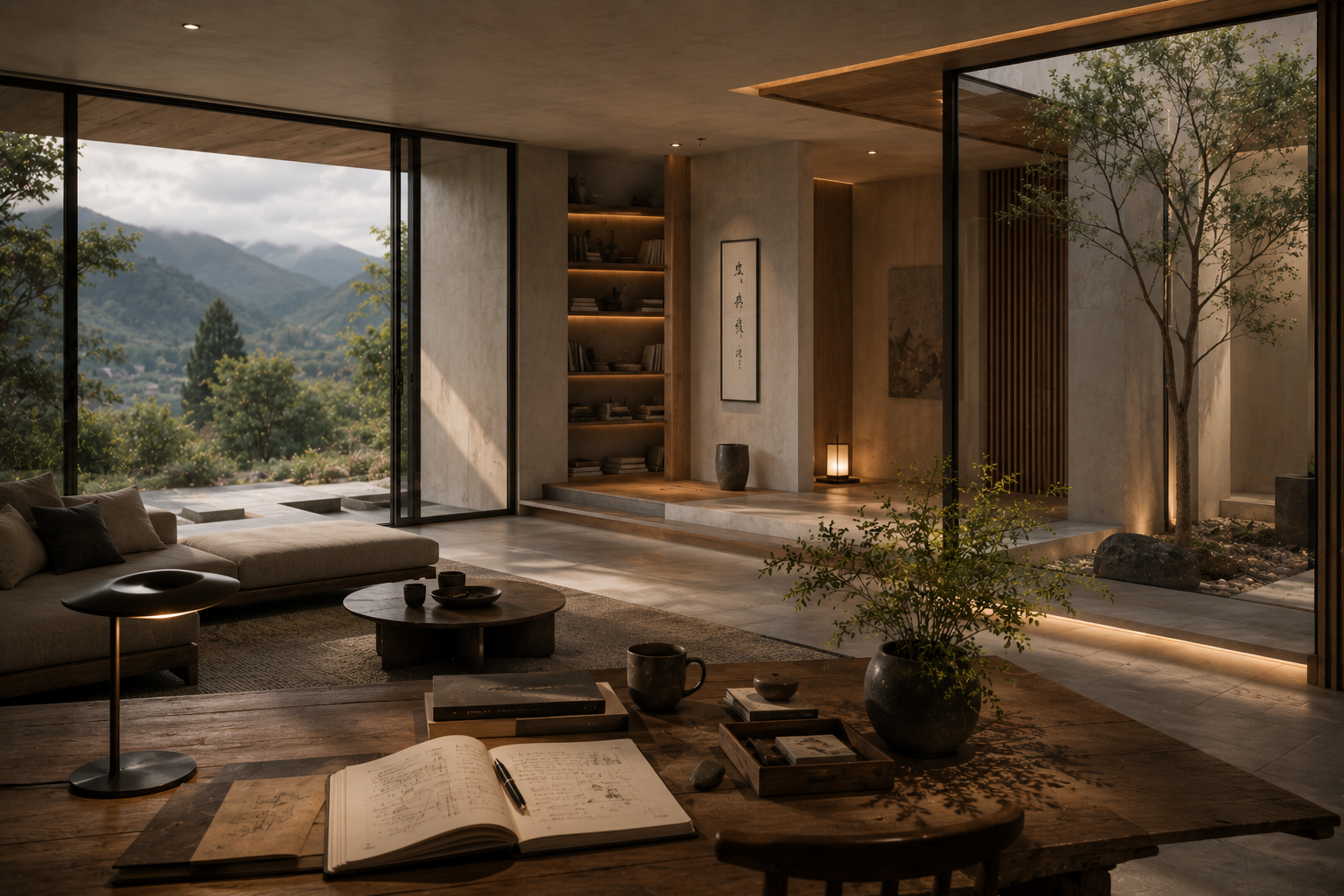
We are crossing a singular epoch. Reference points do not collapse brutally — they gradually cease to function. The models that structured our decisions — economic, technical, organisational or social — show their limits in the face of the world’s growing complexity.
It is not change that poses the problem.
It is our way of inhabiting it.
Today, the question is no longer how to return to a stable state, but how to evolve with discernment in a world in permanent mutation.
The world is not in crisis, it is in transformation
We speak of crises because we still use old reading grids to understand a new reality. Ecological crisis, social crisis, crisis of meaning, crisis of confidence… These symptoms reflect less a collapse than a paradigm shift.
A profound transformation cannot be managed with superficial solutions. It demands a change of posture, a capacity to perceive differently, to integrate dimensions long ignored. This is where consciousness enters the picture.
Consciousness: a long-underestimated capacity
Consciousness has often been relegated to the intimate or spiritual domain, as if it belonged exclusively to personal development or inner seeking. Yet it designates above all a fundamental aptitude: the capacity to perceive with precision what is at work.
Perceiving underlying interactions.
Perceiving long-term impacts.
Perceiving imbalances before they become ruptures.
In a simple world, this capacity could seem accessory.
In a complex world, it becomes strategic.
Complexity and acceleration: a challenge for our decision-making modes
Our societies value speed, efficiency, optimisation. These qualities have enabled considerable advances, but today they show their limits. The more systems grow complex, the more decisions taken in urgency risk producing effects contrary to those sought.
Faced with this complexity, two attitudes oppose each other: simplify to the extreme to maintain an illusion of control, or accept complexity and learn to traverse it with intelligence. Consciousness does not seek to reduce the real.
It seeks to inhabit it.
Inhabiting rather than mastering
We have long approached the world as a set of problems to be solved and resources to be exploited. This approach today reaches a point of saturation.
Certain phenomena are not mastered.
They are understood, listened to and accompanied.
Inhabiting a project is being attentive to its own rhythm.
Inhabiting an organisation is recognising the human dynamics that traverse it.
Inhabiting a place is perceiving what it carries beyond its function.
This posture demands a different presence, more refined, more responsible.
IRRINIUM: connecting dimensions rather than opposing them
IRRINIUM inscribes itself in this silent transition. From the outset, its approach rests on a simple conviction: the artificial separations between matter and consciousness, technique and the human, efficiency and meaning, are no longer operative.
Connect rather than fragment.
Integrate rather than superimpose.
Take into account the measurable and the intangible, the short term and the long term.
It is not about adding a layer of discourse, but transforming the quality of presence in what is conceived, decided and transmitted.
Toward collective maturity
Consciousness is not a refuge nor a flight from the world.
It is a responsibility.
It invites more just choices, sometimes slower, but profoundly durable. It transforms our way of envisioning innovation, success and even the notion of progress.
In a world in mutation, the true competence is no longer only knowing how to do, but knowing how to perceive, adjust and connect.
Conclusion
Inhabiting change is no longer an option: it is an essential condition for traversing our epoch with lucidity and coherence.
IRRINIUM explores this space of connection and discernment, not as a definitive answer, but as a conscious approach in the face of the real’s complexity.
For it is often in the quality of presence that the most durable transformations are born.
Yannick Costechareyre